
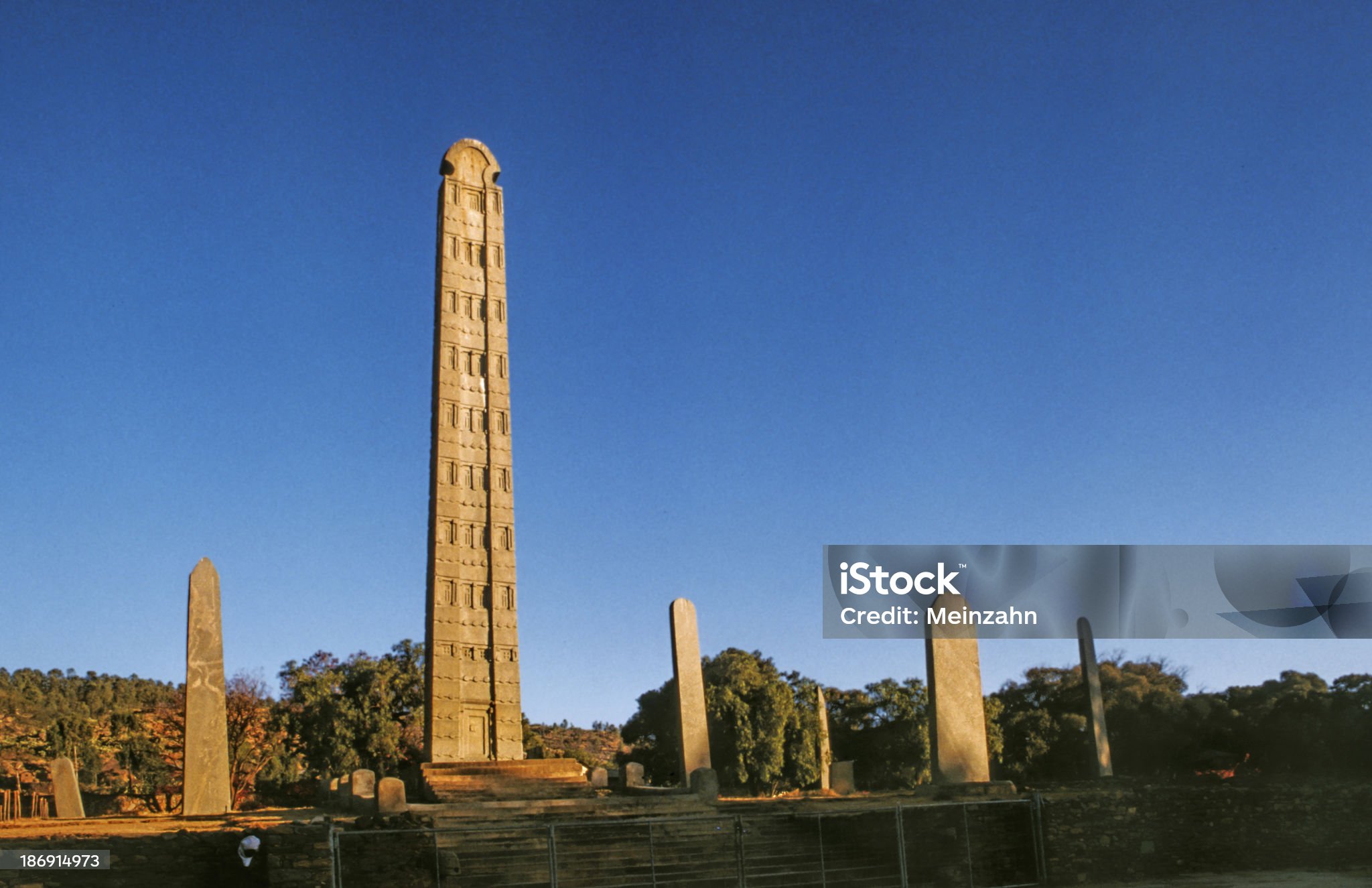
The structures commonly referred to as the Aksum Statues are actually monumental monolithic pillars properly known as the Stelae or Obelisks of Axum (locally called Hawelti in Tigrinya and Ge'ez). Located in the historic city of Axum in the Tigray Region of northern Ethiopia, these massive granite towers are a designated
Rather than being statues of figures, they were carved from single blocks of stone during the 4th century CE by the ancient Kingdom of Aksum, an empire that controlled critical trade routes between Rome, Persia, and India.
There is a distinct kind of magic that settles over northern Ethiopia just as the sun begins to breach the horizon. In Axum, a city that feels less like a modern layout and more like an open-air archaeological dig, history doesn’t feel dusty or dead. It breathes.
As the capital of the ancient Aksumite Empire—which once ranked alongside Rome, Persia, and China as one of the world's four great powers—this unassuming town holds centuries of secrets. If you only have one day to unravel them, lace up your walking shoes. Here is your ultimate blueprint to spending a perfect, time-bending day in Axum.
Morning: Shadows of Stone at the Stelae Field
Start your day early at the Central Stelae Park, preferably right as the gates open. Watching the morning mist lift from these towering granite monoliths is an experience you won't forget.
These aren't just monuments; they are architectural marvels. Carved from solid granite blocks over 1,700 years ago, they served as subterranean burial markers for Aksumite royalty.
Take time to look closely at the carvings. The stelae are etched to mimic multi-story palaces, complete with false windows, intricate structural beams, and blind doors with wooden locks. It's a striking look into how the living elites housed their dead.
Midday: Sacred Guardians and the Ark of the Covenant
From the stelae fields, cross the road to the most sacred ground in Ethiopia: the Church of Our Lady Mary of Zion.
The compound features a striking contrast of eras. You'll first encounter the massive, modern domed cathedral built by Emperor Haile Selassie in the 1960s. Just adjacent sits the ancient, fortress-like old church built by Emperor Fasilides in the 17th century.
Nestled between them is a small, heavily fenced chapel: the Chapel of the Tablet. According to Ethiopian Orthodox tradition, this modest building houses the biblical Ark of the Covenant, brought here from Jerusalem by Menelik I, the son of the Queen of Sheba and King Solomon.
Note for Travelers: While no one is permitted inside the chapel except a single, lifelong guardian monk, standing in the courtyard amidst swaying incense and white-robed worshippers chanting ancient Ge'ez liturgies offers an incredibly powerful atmosphere.
